



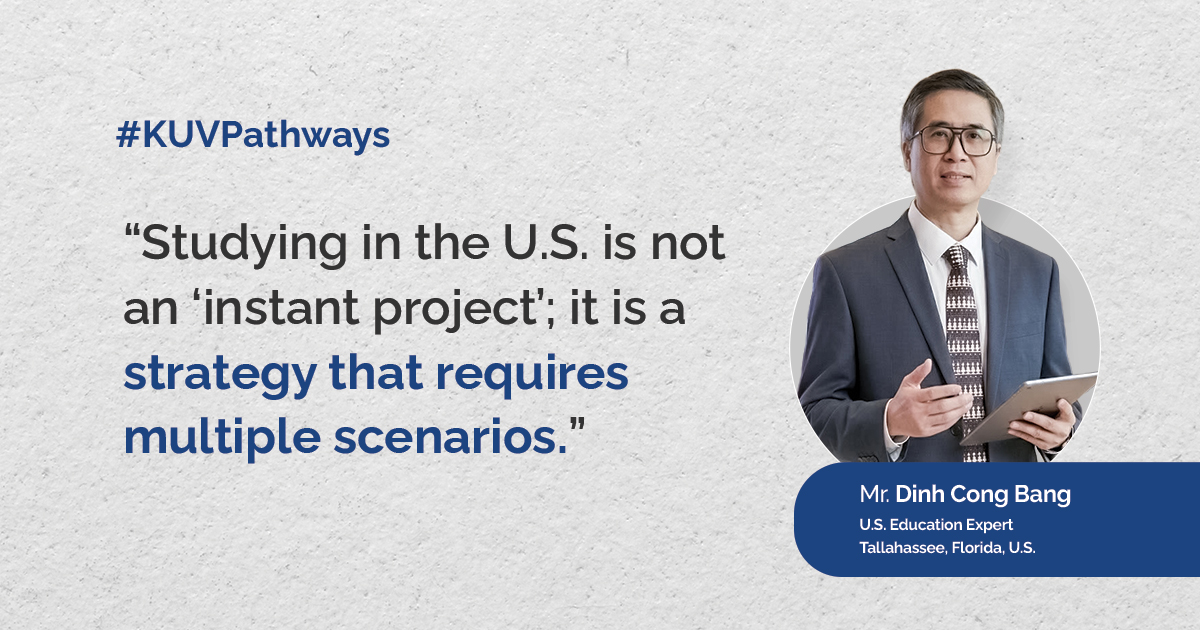
As the U.S. job market and visa policies continue to shift, studying in the U.S. in 2026 should no longer be viewed as a short-term project. Expert Dinh Cong Bang shares practical insights on how Vietnamese students can build a strategy that optimizes both risk and cost.
U.S. Study Abroad Market 2026: When “Uncertainty” Becomes the New Normal
Speaking on February 28, 2026, from Tallahassee, Florida, education expert Dinh Cong Bang emphasized that the study-abroad landscape has been evolving faster than ever in the post-COVID era.
Three key factors students should pay attention to:
- Impact of AI: The U.S. labor market is rapidly restructuring, requiring students to develop strong adaptability and future-ready skills.
- H-1B Visa Policies: New regulations are expected to intensify competition, making a strong academic and professional profile more important than ever.
- Career Pressure: Many fields once considered “safe choices” are no longer as predictable as before.
Choosing Sustainable Majors and Building a Multi-Scenario Study Plan
According to Mr. Bang, instead of chasing short-term trends, students should focus on sustainable fields, especially STEM-related majors, such as:
- Accounting
- Nursing
- Engineering and advanced technology fields
He also suggests a new perspective: many Vietnamese universities offer strong undergraduate programs. Students can optimize their pathway by completing a bachelor’s degree in Vietnam and pursuing a master’s degree in the U.S. This allows them to gain academic maturity and life experience before studying abroad.
Transfer Pathways: A Smart Solution to Optimize Risk and Cost
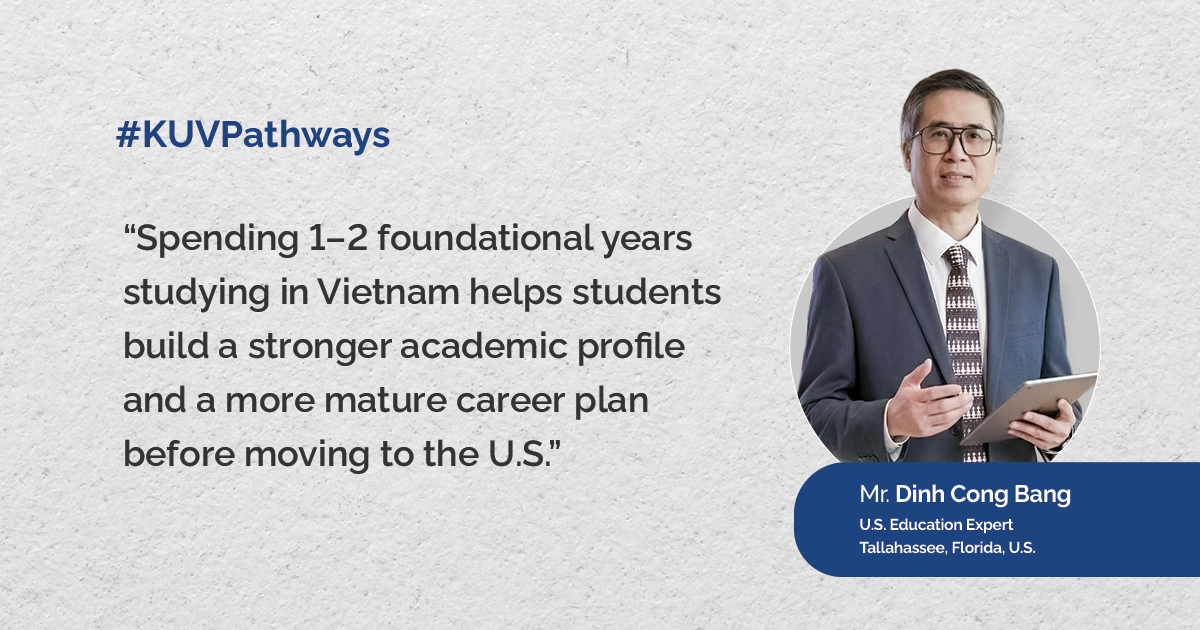
Another effective approach is starting with a 1–2 year transfer pathway in Vietnam following an American-standard curriculum.
Why choose the transfer pathway at Keiser University, Vietnam (KUV)?
- U.S. Standards in Vietnam: KUV is an official international center of Keiser University, a nonprofit private university in the United States recognized among National Universities and accredited by SACSCOC and ACBSP.
- Flexible 2+2 Pathway:
Students study the first two years in Hanoi, Hue, or Ho Chi Minh City, then transfer to Florida or partner universities in the U.S. - Better Scholarship Opportunities:
Achieving a strong GPA during the first two years in Vietnam can become a powerful advantage for gaining admission and scholarships at higher-ranked universities in the U.S.
Conclusion
Studying in the U.S. in 2026 requires careful preparation and a long-term mindset. Close collaboration between families, students, and education advisors will be the key to building a sustainable academic and career future in the United States.