






Academic and Professional Qualifications
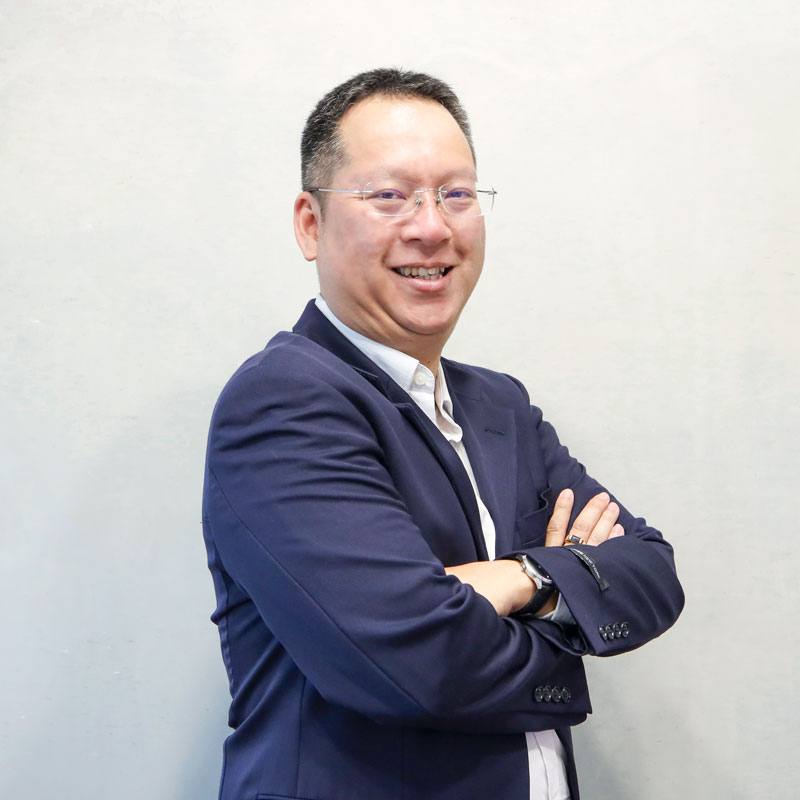
Mr. Tran Hoang Linh holds three degrees in Electrical and Computer Engineering from prominent U.S. universities, demonstrating a strong foundation and advanced specialization in integrated circuit (IC) design and digital systems.
- Doctor of Philosophy (PhD) – Electrical and Computer Engineering, completed at Portland State University, USA (2012–2015). The dissertation focused on “Reversible Circuits Synthesis Based on EXOR-sum of Products of EXOR-sums”
- Master of Science (MSc) – Electrical and Computer Engineering, completed at Portland State University, USA (2005–2006)
- Bachelor of Science (BS) – Computer Engineering, completed at the University of Illinois, Urbana Champaign, USA (2001–2005)
Technical Expertise and Skills
Mr. Linh is proficient in multiple operating systems, programming languages, and specialized design tools critical for Electrical and Computer Engineering:
- Operating Systems: Windows, Linux, and Android.
- Computer Languages: C#.NET, VB.NET, C/C++, Visual C++, Java, Python, and Assembly.
- HDL/IC Design Tools: Verilog and VHDL. He is proficient with Quartus II, Xilinx ISE, Synopsys tools, and Cadence tools (Allegro, Virtuoso).
- Scientific Tool: MATLAB/Simulink.
Teaching Experience and Quality Management
Mr. Linh has substantial experience as a lecturer in Vietnam and as a teaching assistant in the U.S., focusing primarily on electronics and digital design courses. His responsibilities include comprehensive course management and student supervision.
Lecturer Roles and Course Management
He has held two separate periods as a Lecturer at the Faculty of Electrical and Electronics Engineering, University of Technology, Hochiminh City, Vietnam (2015–Present and 2010–2012).
- Curriculum and Assessment: In both lecturer roles, he developed the syllabus and overall course structure. He was responsible for administering all grades for his courses.
- Specific Courses Taught: His instruction covered a wide range of Electronics Engineering topics, including Introduction to Electronics Engineering, Microprocessors, Digital Design, Advance Digital Design, ASIC Design, Digital IC Design, and Computer Architecture.
- Student Supervision: He has supervised graduate and undergraduate students on their final projects, mainly focused on IC Design, FPGA, and Embedded System areas.
U.S. Teaching Experience
From 2013 to 2015, he served as a Lab advisor and Teaching Assistant at Masseeh College of Engineering and Computer Science, Portland State University, USA. In this role, he guided students and assisted the teaching activities for the courses ‘Digital Design’ and “Electric Circuit Analysis”.
Research and Achievements
Mr. Linh’s research focuses on the intersection of advanced digital design (Reversible Circuits and Quantum Computing) and computational methods (Data Mining and Machine Learning), resulting in publications indexed in Scopus and other journals.
Research Interests
His primary research interests span several highly technical domains: IC Design, FPGA, Quantum Computing, Reversible Circuit, Internet of Thing (IoT), Embedded Systems, and Data Mining.
Key Publications and Research Focus
His achievements are demonstrated through numerous publications centered on two major themes:
-
Reversible Circuits and Quantum Computing:
- His doctoral research focused on the Synthesis of Reversible Circuits Based on EXORs of Products of EXORs.
- He contributed to papers on An Improved Factorization Approach to Reversible Circuit Synthesis and the Synthesis of Reversible Circuits Based on Product of Exclusive Or Sums.
- He co-authored work on a Two-Stage Approach to the Minimization of Quantum Circuit Based on ESOP Minimization and Addition of a Single Ancilla Qubit.
-
Machine Learning, Data Mining, and Bioinformatics:
- He co-authored accepted Scopus papers applying computational methods to biological problems, such as Applications Of (Sparse)-PCA And Laplacian Eigenmaps To Biological Network Inference Problem Using Gene Expression Data.
- His work includes applying the un-normalized graph p-Laplacian based semi-supervised learning method to the speech recognition problem.
- He contributed to research on Disease Gene Prioritization and the Novel Un-normalized Graph (p-) Laplacian Ranking Methods.
- Further publications include Hypergraph and Protein Function Prediction with Gene Expression Data and applying the Un-Normalized Graph P-Laplacian Semi-Supervised Learning Method Applied to Cancer Classification Problem